What your inverter actually does
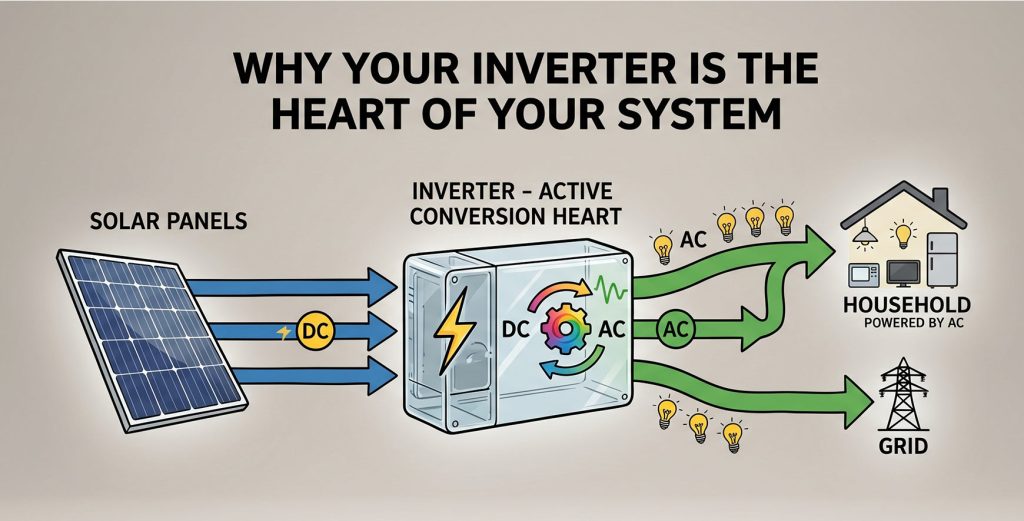
Your solar panels generate direct current (DC) electricity. Your home runs on alternating current (AC). The inverter sits between the two and handles the conversion, every second your system is operating.
Without it, the electricity your panels produce cannot power a single appliance. It is also the component most likely to need attention before your panels do, which is why understanding its role matters when something starts to go wrong.
How long a solar inverter lasts
Most solar inverters are rated for 10 to 15 years. Quality brands at the upper end of that range are common, but actual lifespan depends on installation quality, ventilation, and the conditions the unit operates in day after day.
In Queensland, heat is the main pressure point. Inverters generate heat during operation, and high ambient temperatures add load to internal components. A unit installed in a poorly ventilated space, or exposed to direct afternoon sun, will tend to age faster than one in a shaded, well-ventilated location.
Solar panels typically carry 25-year performance warranties. That gap matters: if your system is 12 years old and your inverter fails, you are not looking at a system failure. You are looking at a single component that can be replaced while the rest of your system continues to perform.
Warning signs your inverter is failing
These are the most common signals that something is wrong with the inverter specifically, rather than a panel, wiring, or grid issue:
- Error codes or fault lights on the inverter display
- Output consistently lower than expected for the time of year and available sunlight
- Inverter shutting down and restarting during the day
- No generation showing in your monitoring app despite clear, sunny conditions
- Unusual heat or noise coming from the unit
- The system has stopped exporting to the grid but shows no fault code
One or two of these on a single day can have straightforward explanations. A persistent pattern across several days is a stronger signal that the inverter itself needs professional assessment.
Repair or replace: how to decide
The decision comes down to three things: the inverter’s age, its warranty status, and what a repair will cost relative to a full solar inverter replacement.
When repair makes sense
Repair is generally worth pursuing when:
- The inverter is under 7 years old
- It is still within the manufacturer’s warranty period, typically 5 to 10 years depending on the brand
- The fault is a known, fixable component failure rather than a core unit failure
- The repair cost is less than roughly 40% of a replacement quote
If your inverter is still under warranty, the manufacturer may cover repair or replacement at no cost to you. A qualified installer can confirm the warranty status and lodge a claim on your behalf.
When replacement is the better call
Replacement becomes the more practical option when:
- The inverter is 12 years old or older
- It is out of warranty and the repair quote is substantial
- The same unit has failed more than once
- You want to move to a hybrid inverter to support battery storage down the track
Replacing an older inverter also gives you access to improved technology: better monitoring, higher efficiency ratings, and compatibility with battery systems. If you have been considering adding storage to your property, an inverter replacement is a practical point to make that move.
Our solar battery systems page covers what battery storage involves and whether it suits your energy usage and property setup.
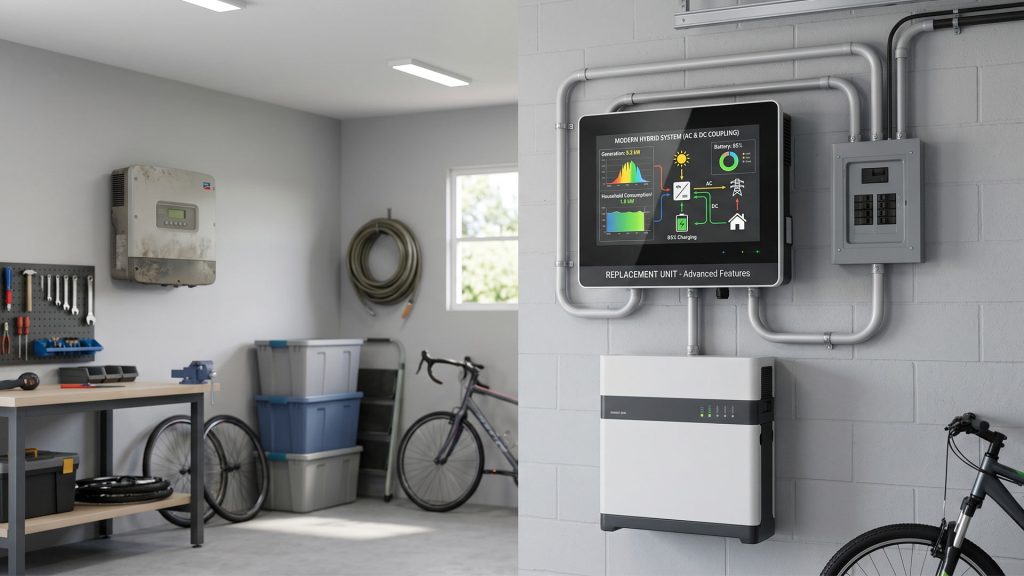
Solar inverter replacement cost in Australia
Replacement costs vary by inverter type, system size, and brand. The ranges below apply to residential systems in Australia and include supply and installation by a SAA-accredited installer:
| System size | String inverter | Hybrid inverter |
| 5 to 6.6 kW | $1,500 to $2,500 | $2,500 to $4,000 |
| 8 to 10 kW | $2,000 to $3,500 | $3,500 to $5,500 |
| 13 kW and above | $3,000 to $5,000+ | $5,000 to $8,000+ |
Labour typically adds $300 to $600 on top of the unit cost, depending on the complexity of the job. If your replacement inverter is a different brand or type to the existing unit, additional wiring or reconfiguration may be required, which can push the total toward the upper end of those ranges.
What to expect during a solar inverter replacement
The process is straightforward when handled by a qualified installer. Here is what it typically involves:
- Site assessment: The installer inspects the existing inverter, wiring, and switchboard to confirm the fault and identify which replacement unit is compatible with your system.
- Inverter selection: Based on your system size and whether battery compatibility is a priority, your installer recommends a suitable unit.
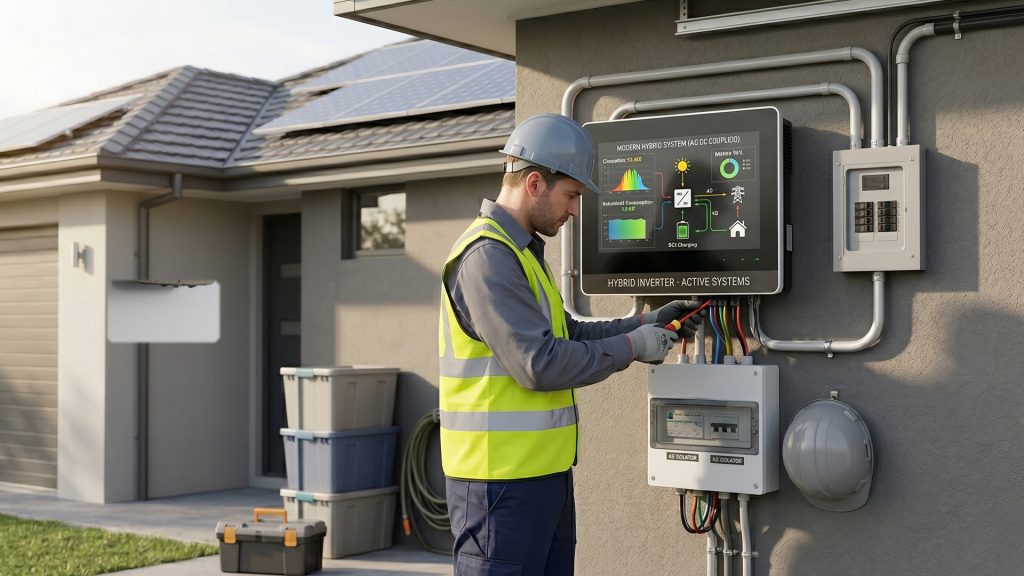
- Installation: The old inverter is safely disconnected and removed. The replacement is mounted, wired, and connected to both the array and the grid.
- Testing and commissioning: The system is tested under live conditions to confirm correct output and grid export.
- Monitoring setup: If the new unit includes an app or monitoring portal, your installer configures this before leaving.
In most cases, the full replacement is completed in a single visit of two to four hours. Under Australian law, grid-connected solar work must be carried out by a SAA-accredited installer.
If you are unsure whether repair or replacement is the right call for your system, our team can carry out an assessment and give you an honest recommendation. Visit our residential solar page to learn more about how we work, or get in touch directly to discuss your situation.