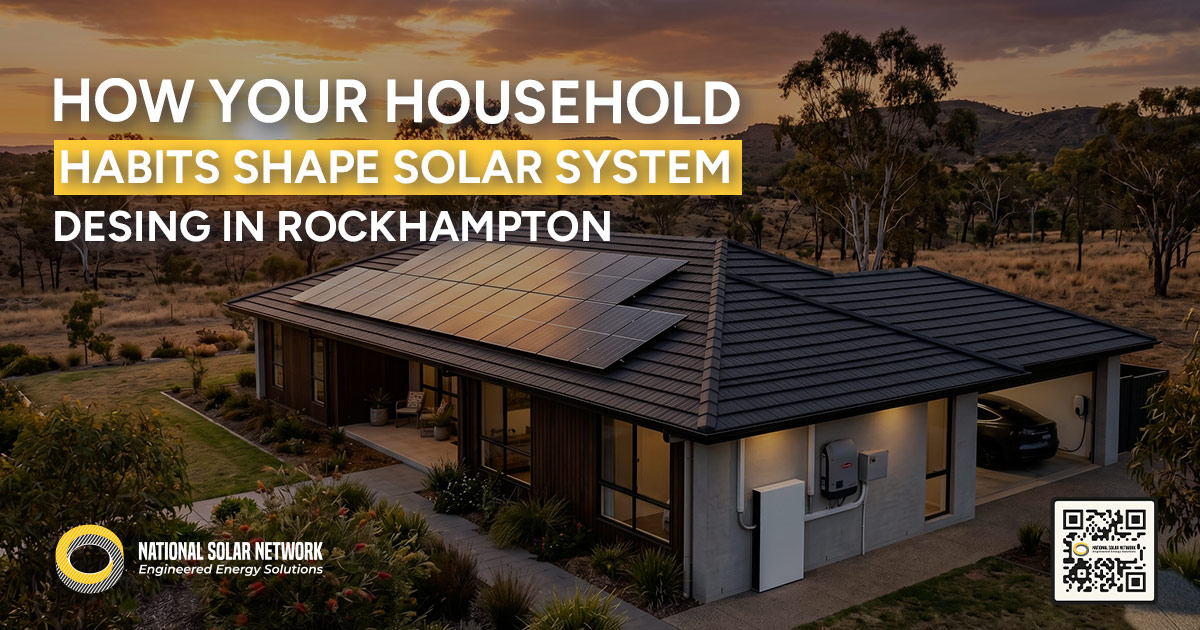
Most people approach solar with one number in mind: their electricity bill. It is a reasonable starting point, but it only tells part of the story. Two households in Rockhampton with identical quarterly bills can need very different systems, depending on when they use power, what appliances are running, and how the property is set up.
That is what solar system design is actually about. Not picking a package off a shelf, but working out what your home genuinely needs before a single panel is specified.
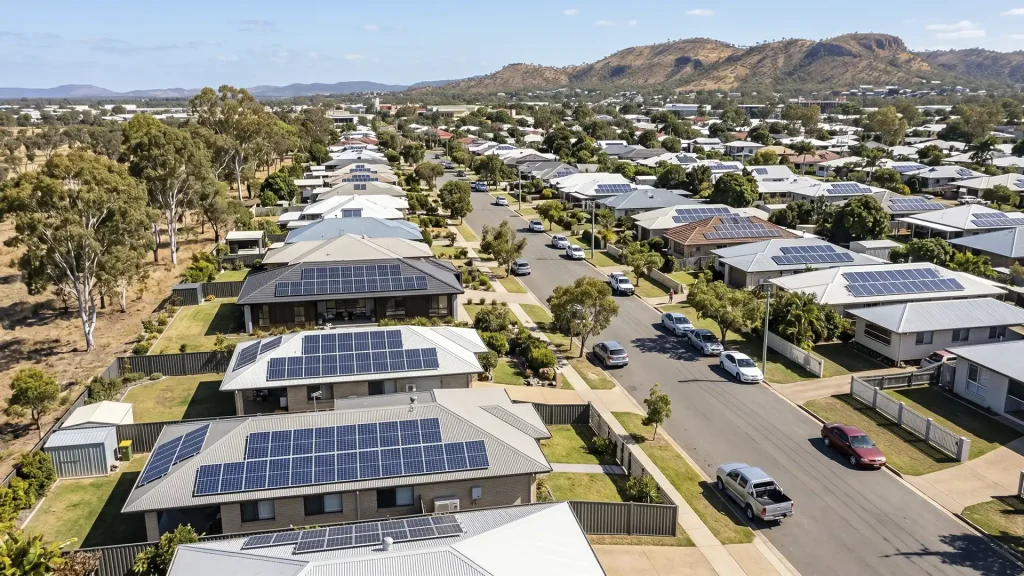
Rockhampton’s Energy Reality: Heat, Sun, and High Bills
Rockhampton sits in one of the most solar-favourable positions in Queensland. The region receives strong daily solar irradiance year-round, with long summer days that push daily generation well above what you would expect further south.
The same climate also pushes electricity consumption up. Cooling loads in Rockhampton are among the highest in Central Queensland. Air conditioning runs for longer, at higher settings, across more months of the year than in Brisbane or the coast. For many households, the air conditioner accounts for 40 to 50 percent of total electricity consumption.
That combination of high sun availability and high cooling demand is what makes solar power particularly well-suited to Rockhampton homes. But it also means system design has to account for real local conditions, not national averages.
The Usage Patterns We See Most Often in Rockhampton Homes
When we carry out an energy assessment, usage patterns tend to fall into recognisable categories. Each one has different implications for system size, battery suitability, and design priorities.
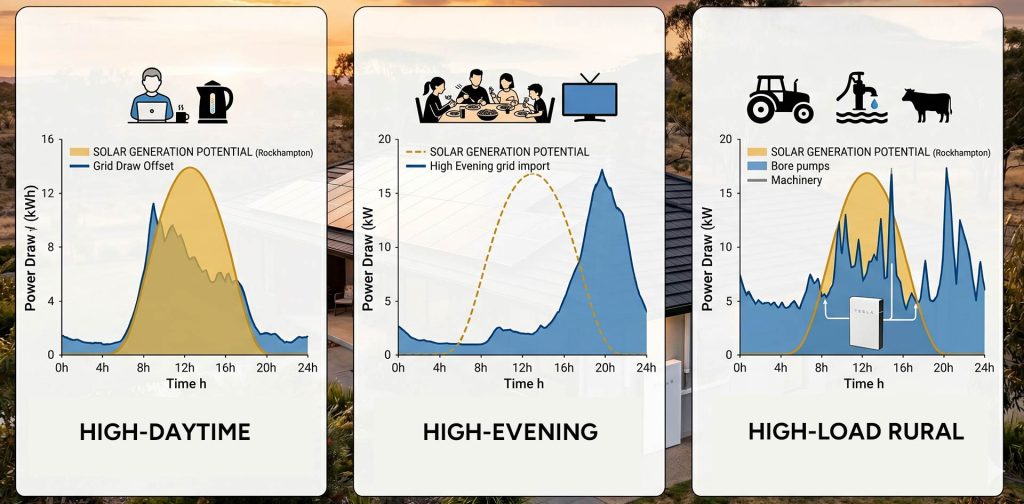
The High-Daytime Household
Retirees, home-based workers, and single-occupant households typically use most of their electricity between 8am and 5pm. Air conditioning runs through the hottest part of the day. Appliances like washing machines and dishwashers are used during daylight hours.
For this profile, solar self-consumption can be very high. A well-sized grid-connect system, often in the 6.6kW to 10kW range, can offset the majority of daytime demand directly. A battery may add value, but it is not always the first priority. The focus is on matching panel capacity to the peak midday load.
The High-Evening Household
Working families with school-age children follow a different pattern. The house is largely empty during the day, and consumption peaks after 5pm: cooking, television, air conditioning, homework, hot showers. Solar generation is winding down exactly when the household is ramping up.
This profile exports a larger share of solar generation to the grid during the day and imports from the grid in the evening. A battery changes that equation. It stores the daytime surplus and releases it when it is actually needed, improving the return on the solar investment meaningfully.
The High-Load Rural or Fringe Property
Properties on larger blocks around Rockhampton, or further out toward Gracemere, Mount Morgan, or Stanwell, often carry loads that urban homes do not. Bore pumps, irrigation systems, machinery sheds, and water heating for livestock can all contribute significantly to daily consumption.
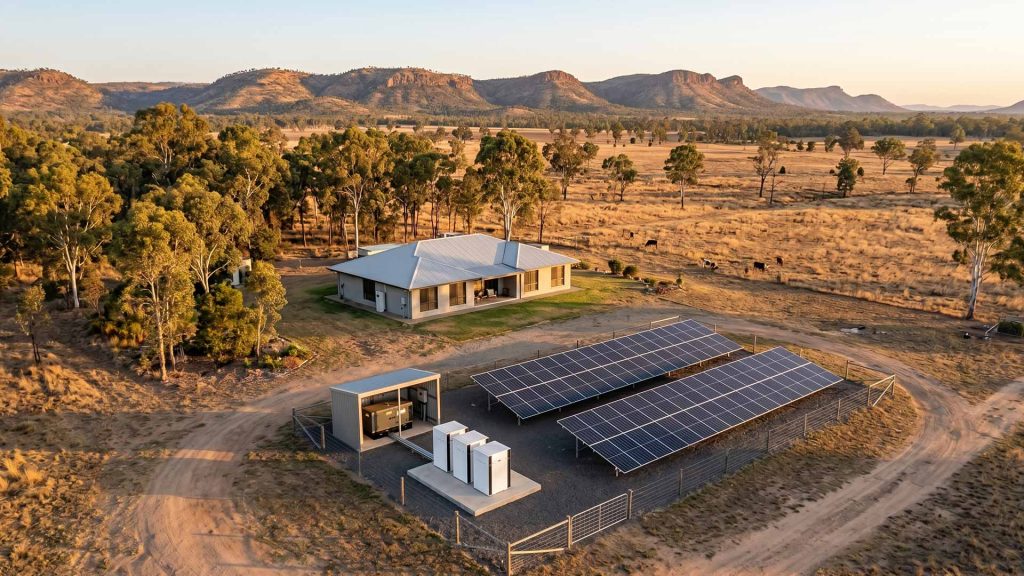
Some of these properties are also on the fringe of the grid, where supply reliability is lower or grid connection costs are high. For these situations, the design conversation shifts toward larger systems, deeper battery capacity, and in some cases a fully off-grid configuration.
What Your Usage Pattern Actually Tells a Designer
A quarterly electricity bill gives a total consumption figure. A usage profile gives the shape of that consumption across the day. Both matter, but the shape is what drives most design decisions.
When we review a property’s energy data, we are looking for three things:
- Total daily consumption – the baseline that determines minimum system capacity
- When peak loads occur – morning, midday, or evening, and for how long
- What is driving the peaks – air conditioning, hot water, pool pumps, or general household load
Each of these factors influences a different element of the system design: panel count, inverter size, battery suitability, and the case for shifting high-draw appliances to solar hours. Getting this right upfront avoids the common outcome of a system that generates well but does not actually reduce the bill as much as expected.
How Air Conditioning Shapes System Size in Rockhampton
In most parts of Australia, air conditioning is a seasonal concern. In Rockhampton, it runs for a large portion of the year. A 3-bedroom home running a 7kW ducted system for six to eight hours a day during summer is consuming 40 to 56kWh of electricity from that appliance alone.
A system designed without accounting for that load will underperform against expectations. The household will still be drawing heavily from the grid on hot days, which is often when the motivation to go solar was strongest in the first place.
Sizing a system to absorb a meaningful portion of the cooling load usually means specifying more panel capacity than a national average would suggest. It also means understanding the home’s roof orientation. A north-facing array produces the most energy overall, but west-facing panels can extend generation into the late afternoon, which is when Rockhampton’s afternoon heat peaks and the air conditioner is still running hard.
When Off-Grid Solar Makes Sense for a Rockhampton Property
Off-grid solar is not the right fit for most urban Rockhampton homes. The economics of replacing a grid connection entirely require a combination of high daily consumption, high grid tariffs, and either a remote location or unreliable supply.
That said, there are clear situations where off-grid design becomes the better path:
| Situation | Likely design path |
| Rural property with no existing grid connection | Off-grid from the outset |
| Property where grid connection cost is prohibitive | Off-grid with appropriate battery capacity |
| High grid tariffs combined with very high daily load | Off-grid may outperform grid-connect over time |
| Urban home with grid access and standard tariffs | Grid-connect system, with battery optional |
| Lifestyle or energy independence motivation | Hybrid system with battery, remaining grid-connected |
For most Rockhampton households within the urban area, a grid-connect system with an optional battery delivers the best balance of cost, reliability, and return. Off-grid suits specific property types and circumstances, and it requires a more detailed assessment to confirm it is genuinely viable.
What a Design Assessment Covers Before Any System Is Recommended
A well-run assessment does not begin with a product recommendation. It begins with the property and the people using it. Here is what a thorough design process should cover:
- Electricity bill review: At least 12 months of consumption data to capture seasonal variation, including summer cooling peaks
- Usage profile analysis: Understanding when consumption occurs across the day and week
- Roof inspection: Orientation, pitch, available area, shading from trees or neighbouring structures, and structural suitability
- Appliance audit: Identifying the main load drivers and whether any can be shifted to solar hours
- Grid tariff review: Feed-in tariff rates, supply charges, and time-of-use tariff structure
- Battery suitability check: Whether the household’s evening usage profile justifies the cost of adding storage
- Future load considerations: Planned EV charging, pool additions, or changes in household size
Only once those inputs are clear does a system recommendation make sense. The size, configuration, and component choices all follow from what the assessment reveals.
If you want to understand what a system designed around your actual usage would look like, explore NSN’s residential solar services in Rockhampton or get in touch for an assessment. There is no obligation, and no system recommendation will be made until the picture is complete.