How much maintenance does a solar system actually need?
Solar systems are built for low effort. The panels have no moving parts, and most components are designed to operate for 25 years or more with minimal intervention. That said, “low maintenance” is not the same as “no maintenance.”
A system that goes years without attention loses efficiency gradually. Small issues that could have been caught early become more expensive problems. For a system that represents a significant household investment, a small amount of annual attention is a reasonable return.
What you are protecting is not just the hardware but the output. A well-maintained system performs consistently. A neglected one underperforms quietly for months before anyone notices.
What you can check yourself
Most of the checks a homeowner can safely carry out require nothing more than ground-level observation and access to your monitoring app. No rooftop access, no electrical knowledge required.
Work through this list once a year, or after any major storm:
- Panel surface: From the ground or a safe vantage point, look for debris buildup, bird droppings, or new shading from nearby growth. A single fouled panel can drag down the output of a whole string.
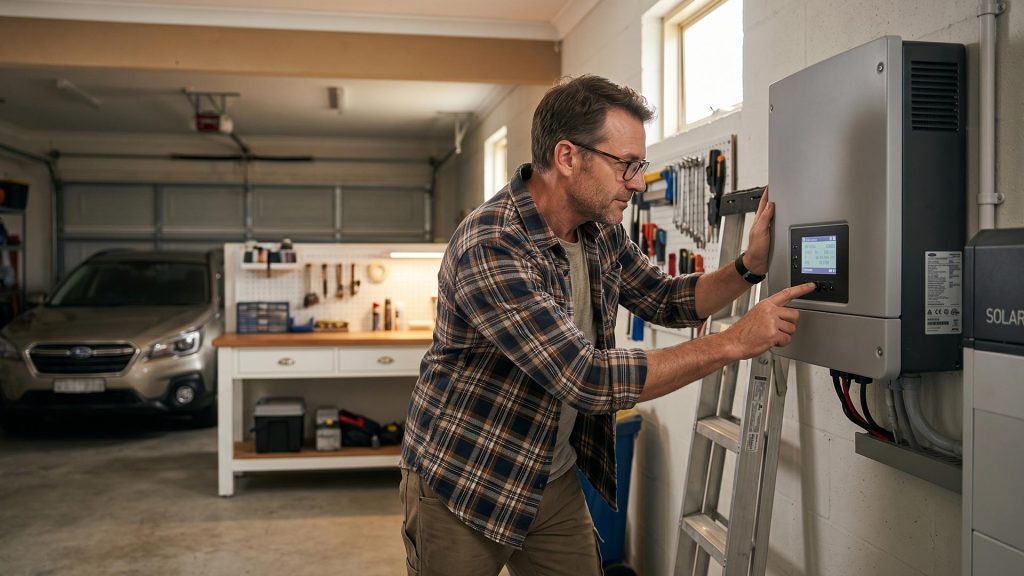
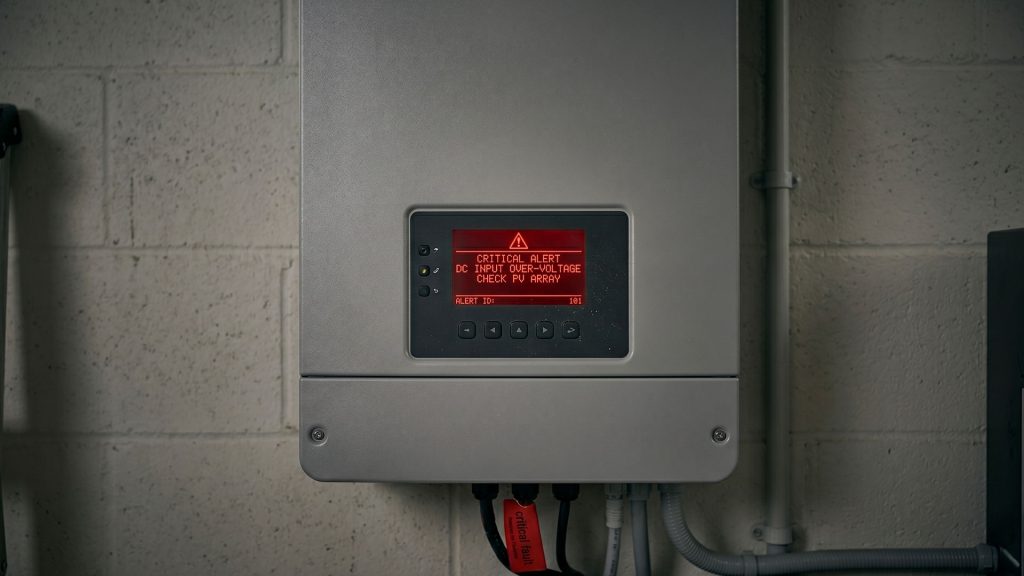
- Inverter display: Check that your inverter shows a green light or “normal” status. Any fault code or warning should be noted and followed up promptly. Most inverters also display daily and cumulative output, record it and track it over time.
- Cabling and connections: Look for visible damage to cables running from the roof. UV degradation, storm impact, and pest activity can all affect connection points.
- Mounting and frames: Check that panels have not shifted or lifted at the edges. In areas prone to strong winds or storms, frame integrity is worth confirming each year.
- Panel tilt and drainage: Panels should be angled enough for water and debris to clear naturally. If water appears to be pooling on the surface or around the frame, debris may be blocking drainage.
Cleaning your panels: the right way
Dust, pollen, bird droppings, and leaf matter all reduce how much light reaches the cells. In Central Queensland, dry season dust accumulation and seasonal bird activity mean panels tend to foul faster than in cooler or wetter parts of the country.
Follow these steps:
- Choose the right time. Clean early in the morning or in the evening. Panels absorb significant heat during the day, and cold water on a hot surface can cause microcracks over time.
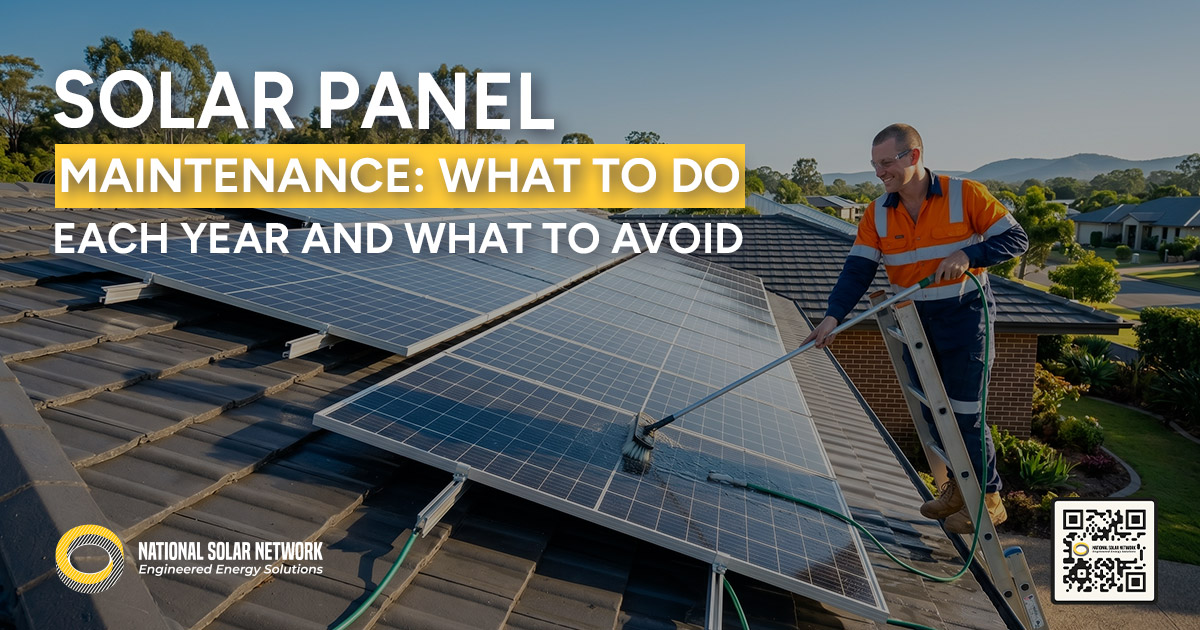
- Use the right tools. A soft-bristled brush or a squeegee with a long handle is sufficient. No abrasive pads, no metal scrapers.
- Keep the pressure low. A standard garden hose provides enough pressure for most debris. If something is stuck, soak it first, then gently work it loose.
- Skip the chemicals. Clean water is enough in most cases. If you use any soap, make sure it is mild, non-abrasive, and free of bleach. Check what your panel manufacturer permits.
- Stay on the ground. Roof access for cleaning is rarely necessary and introduces real safety risk. Long-handled tools let you reach panels from a ladder or from ground level in most residential layouts.
For most systems in this region, two or three cleans per year is adequate. The end of the dry season and after the storm season are the two most practical times.
The mistakes that can cost you your warranty
This is where well-intentioned homeowners can cause real problems. Most solar warranties, both product and workmanship, specify what is and is not permitted. It is worth knowing the line before you cross it.
Actions that commonly affect warranty coverage:
- Using a pressure washer. The pressure can force water under the frame, damage seals, and degrade waterproofing. It is specifically excluded in many panel manufacturer guidelines.
- Applying chemical cleaners without checking first. Harsh or abrasive chemicals can damage the anti-reflective coating and the encapsulant layer beneath the glass. Review your panel documentation before using anything beyond plain water.
- Ignoring fault codes. Running a system with an active fault code for weeks can cause secondary damage. If a fault eventually becomes a warranty claim, an extended delay may complicate the outcome.
- DIY electrical work. DC-side work on a solar system in Australia must be performed by a licensed electrician. Attempting it yourself voids the workmanship warranty and creates a genuine safety risk.
- Unlicensed add-on work. If additional electrical work connected to your solar system, such as a battery addition or EV charger, is carried out by someone who is not properly accredited, it can affect your entitlement under both the installer and product warranty.
When in doubt, refer to the warranty document your installer provided. If you cannot locate it, request a copy.
What a professional service covers (and how often you need one)
A professional service is not a more thorough version of what you do yourself. It covers things a homeowner should not attempt: electrical testing, inverter diagnostics, and structural checks that require sign-off from a licensed electrician.
A service from a CEC-accredited installer typically includes:
- Anti-islanding test: Confirms the system will safely shut down during a grid outage, as required under Australian standards
- Insulation resistance test: Checks for wiring degradation that is not visible from the surface
- Inverter diagnostics: Reviews fault history, efficiency data, and firmware status
- Connector and wiring inspection: Examines MC4 connectors and DC isolators for corrosion or loose connections
- Mounting hardware check: Confirms roof penetrations are watertight and frames are secure
- Performance report: Documents actual versus expected output, giving you a baseline for future comparison
How often? Every one to two years is the standard recommendation under Australian guidelines. If your system is older than five years, annual servicing is worth considering. Some manufacturers also require documented professional servicing to maintain warranty coverage : check your product documentation to confirm.
Always ask for a written service report. It is your record if a warranty issue arises later.
If you are based in Rockhampton or Central Queensland and are looking for a local, CEC-accredited team to carry out a service inspection, our solar panel services page has more information on what we cover.
How to know if your system is underperforming
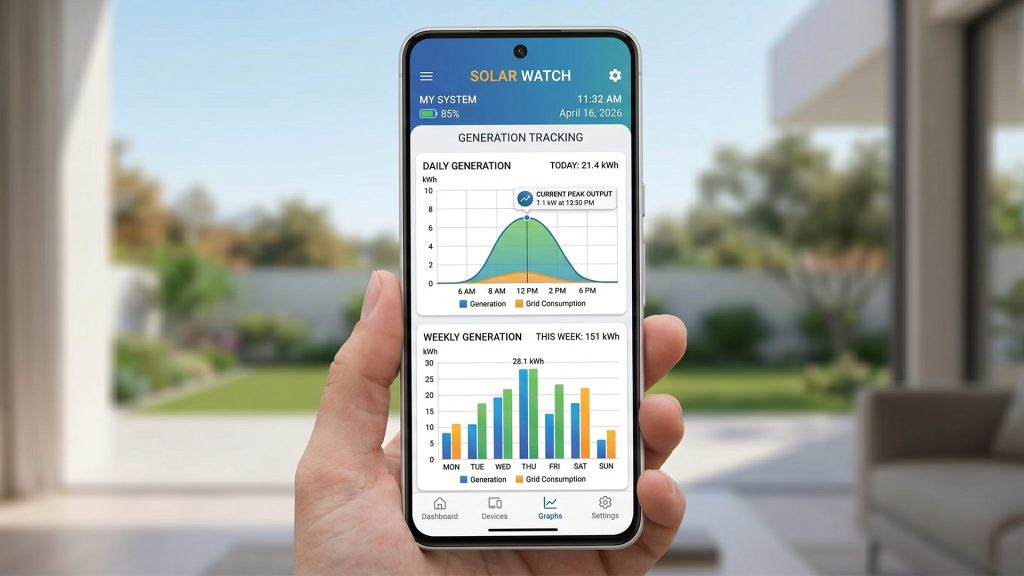
The most actionable thing you can do between professional services is track your output consistently. Most inverters connect to a monitoring app that shows daily, monthly, and annual generation data.
Signs worth investigating:
- A sustained daily output drop of 10 to 20 percent, with no change in weather conditions, that persists for more than a few days
- One string consistently producing less than another, which can point to a faulty panel, a shading problem, or a connection issue
- An inverter running at reduced capacity without triggering a visible fault (some faults cause the system to throttle rather than shut down)
- Output that does not recover after cleaning, which suggests the issue is not surface debris
Seasonal variation is normal. Winter output will be lower than summer output, and overcast periods will show clearly in the data. The pattern to watch for is a sustained drop that does not align with the weather or the season. If you are still in the planning stage and want to understand what a properly sized residential system looks like before install, our residential solar page covers system sizing and what to expect from a new installation.
Battery storage: a few additional checks
If your system includes a battery, there are a handful of items to add to your annual review. Batteries are generally sealed units and require no hands-on maintenance, but they do have servicing needs that are separate from the panels and inverter.
- Ventilation: Confirm the battery enclosure is not obstructed. Heat is the primary factor that shortens battery lifespan, so adequate airflow around the unit matters.
- Firmware: Battery management systems receive updates from manufacturers. Check whether your installer or the manufacturer sends update notifications, and keep a record of what version you are running.
- Cycle and health data: Most battery apps or inverter dashboards show charge cycle counts and state-of-health indicators. Review these figures annually and note any significant changes.
- Connections: Include the battery connections in your professional service. DC connections on battery systems carry high current and should be checked for corrosion and correct torque.
If your battery is still within its manufacturer warranty period, keep documentation of all servicing. Warranty claims on batteries can require evidence of regular maintenance. For more on how battery storage works and what to expect from a system in this region, see our solar battery page.