The short answer: yes, but here’s the real picture
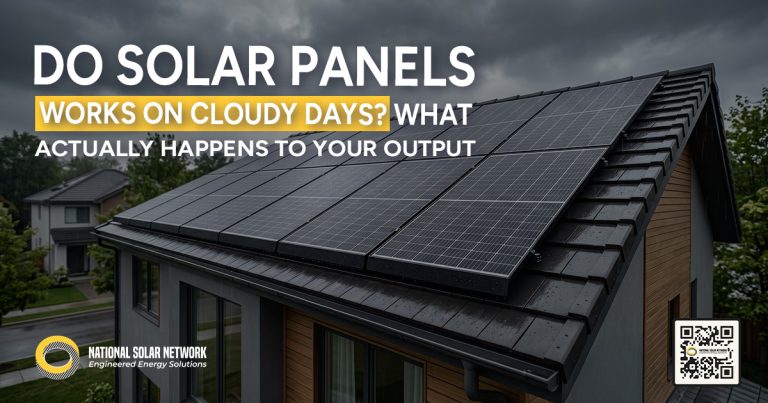
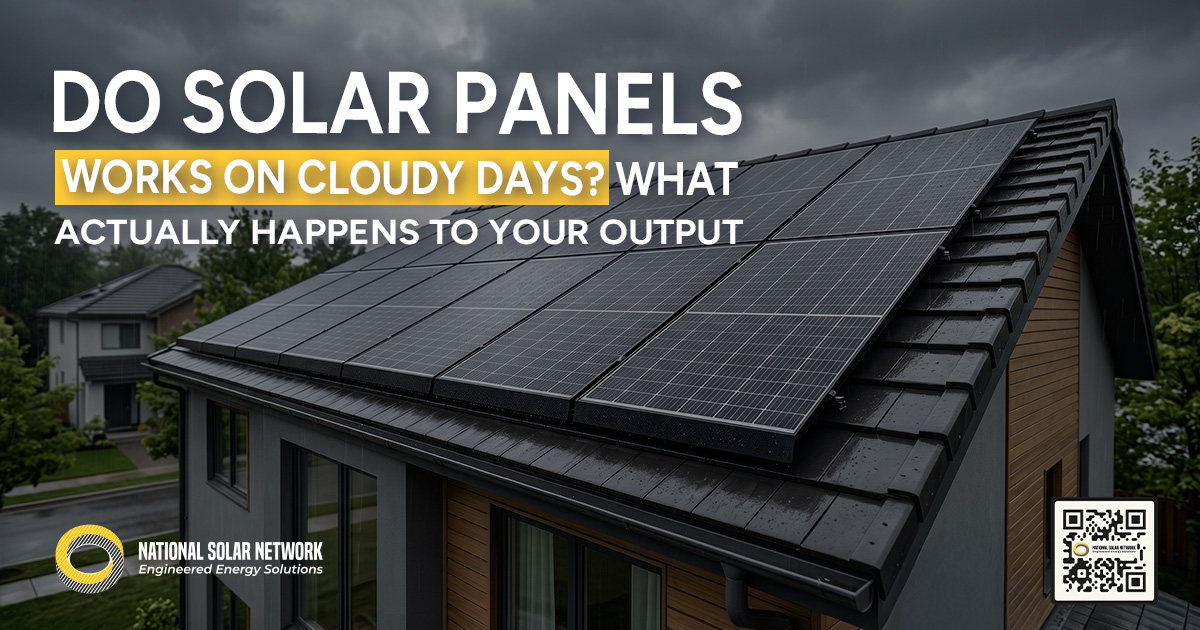
Solar panels keep generating electricity on cloudy days. Output drops compared to a clear sunny day, but the system does not stop. How much it drops depends on the type of cloud cover, not simply whether the sky is grey.
This is one of the most common concerns people raise before installing solar, and it is worth understanding properly, because the reality is more useful than a yes-or-no answer.
Why solar panels don’t need direct sunshine to work
Solar panels convert light into electricity, not heat. The process happens at the cell level: photons from sunlight strike the panel surface and knock electrons loose, creating an electrical current. This is photovoltaic (PV) conversion, and it does not require a clear line of sight to the sun.
When cloud cover rolls in, sunlight scatters as it passes through the atmosphere. Some of it is absorbed, some is reflected, and some continues downward as diffuse light. That diffuse light still carries photons. Your panels still respond to it.
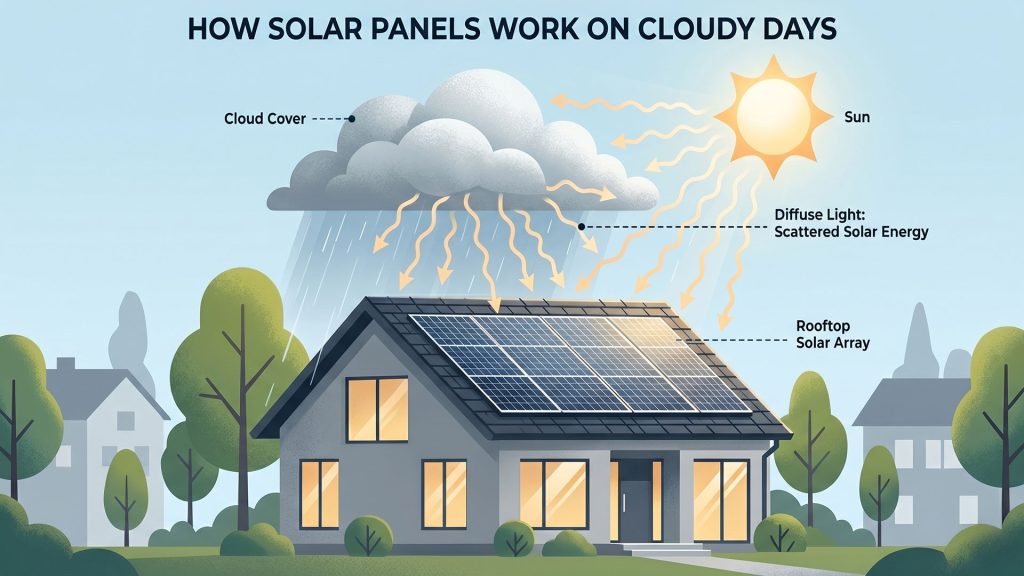
Think of it like reading outdoors on an overcast day. There is still enough light to see clearly, even though you cannot see the sun. The same principle applies to your panels.
How much output do you actually lose?
The output reduction on a cloudy day is not a fixed number. It depends heavily on the type and density of cloud cover. A high, thin cloud has a very different effect on your system than a thick storm front sitting overhead.
Here is a general breakdown based on cloud type:
| Cloud type | Description | Estimated output |
| High, thin cloud (cirrus) | Barely visible; hazy sky | 80-100% of normal |
| Mid-level cloud (altocumulus) | Patchy, broken layers | 40-60% of normal |
| Low, thick cloud (stratus/nimbostratus) | Heavy overcast, dark sky | 10-30% of normal |
These ranges are approximate. Panel quality, system design, and local conditions all influence the actual figure. But the key takeaway is that only the heaviest, darkest cloud cover pushes output to the lower end of the scale. Most overcast days fall somewhere in the middle.
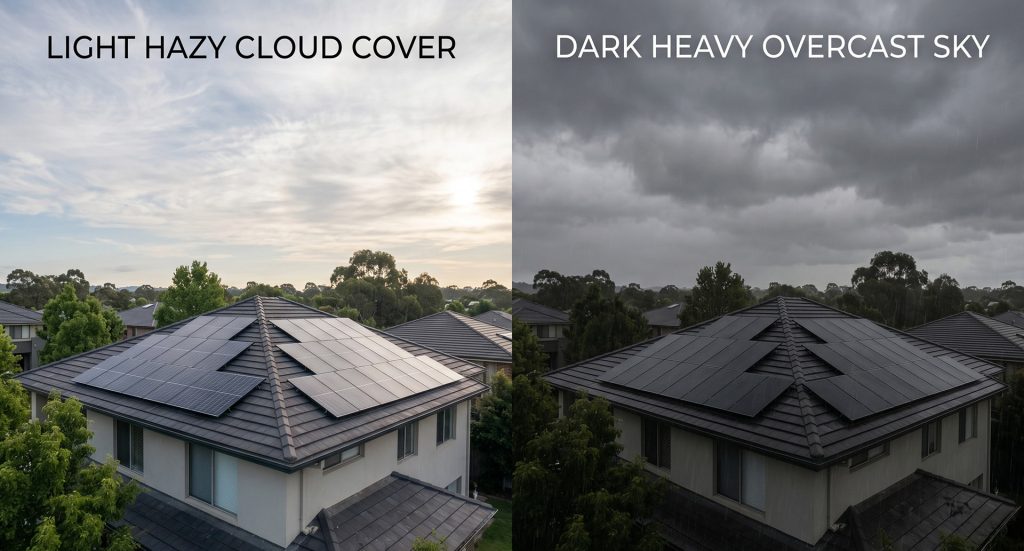
The industry shorthand of “10 to 25 percent on cloudy days” that appears across many websites is based on worst-case cloud conditions. For most partially overcast days, your system will perform considerably better than that figure suggests.
What about rain?
Rain itself reduces output while it is falling, primarily because heavy rain means thick cloud. But precipitation does not damage panels, and it is not dead time for your system.
Rain naturally washes dust, pollen, and grime off the panel surface. In areas like Central Queensland, where dry spells can leave a film of dust on your roof, a good downpour can noticeably improve efficiency in the days that follow. A clean panel surface absorbs more light. The effect is modest, but it is real.
Once the rain clears and the sky begins to open up, your system responds quickly. There is no warm-up period. Output rises as conditions improve.
Solar panels in winter: shorter days, not broken systems
Winter affects solar output through two main variables: fewer hours of daylight and a lower sun angle across the sky. Neither of these stops the system from working. They reduce the total energy generated each day, not the panel’s ability to convert light.
One factor that is often overlooked: solar panels are actually more efficient in cooler temperatures. Panel efficiency begins to decline above around 25 degrees Celsius, as higher temperatures increase electrical resistance within the cell. A mild winter day can produce comparable output to a hotter summer day, particularly in the middle hours when the sun is at its highest point.
In Central Queensland, winters are mild and dry compared to southern states. Shorter days do reduce daily generation, but the region’s clear winter skies often compensate more than residents expect. A well-sized system will continue to offset a meaningful portion of household consumption through the cooler months.
Does cloudy weather affect whether solar is worth it in Central Queensland?
This is the question behind the question. People ask whether panels work on cloudy days because what they really want to know is whether solar makes financial sense in their location.
Rockhampton and the broader Central Queensland region receive some of the highest levels of solar radiation in Australia. If you want to understand how that translates into system performance for your specific property, the solar Rockhampton page covers the local context in detail.
The coast and interior both benefit from a climate that delivers far more usable sunlight annually than most of Europe, where solar adoption is widespread and well-established. Germany, which has a notably cloudy and low-light climate, generates a substantial share of its national electricity from solar and regularly leads global output rankings.
Cloudy days exist here, as they do everywhere. But they sit within a yearly average that remains strongly favourable for solar performance. What matters for your return is not the occasional grey day, but how the system performs across the full year. In Central Queensland, that annual average is one of the strongest in the country.
How to make the most of low-light days
System design and maintenance choices directly affect how well your panels handle reduced sunlight. These are practical decisions that make a measurable difference:
- Panel quality: Higher-grade monocrystalline panels have better low-light performance than entry-level alternatives. The difference shows up most on overcast days when every photon counts.
- Inverter technology: Microinverters and DC optimisers allow each panel to operate independently. On a day when one section of the roof is shaded by cloud or a nearby tree, the rest of the system is not dragged down.
- Orientation and tilt: Panels correctly oriented and angled for your specific roof and latitude capture more diffuse light. This is assessed during a site inspection before installation.
- Regular cleaning: Dust and debris reduce efficiency even before cloud cover becomes a factor. A clean panel starts each day in the best possible condition.
- Battery storage: A home battery system stores the surplus energy generated on clear days and makes it available when output drops, whether due to cloud cover or after the sun goes down. It extends the practical value of your system across the full 24 hours.
If you are ready to look at what a residential solar system could look like for your property, the residential solar page covers system sizing, the installation process, and what to expect from an initial assessment.