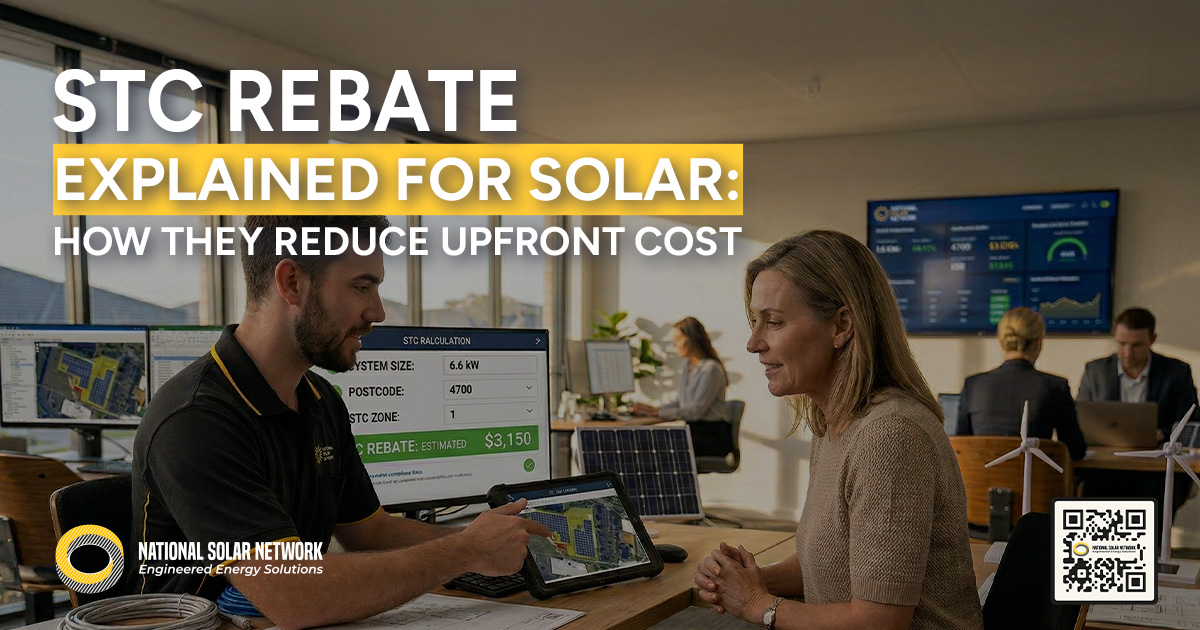
The STC rebate is the term many people use to describe the upfront solar discount linked to small-scale technology certificates. This page explains how STCs work for solar, what affects the amount, and what to check before relying on the figure shown in a quote.
What the STC rebate is and how it works
The STC rebate is the name many people use for the upfront solar discount linked to small-scale technology certificates, or STCs. In formal terms, STCs sit within the Small-scale Renewable Energy Scheme. In everyday use, most homeowners and businesses simply see the value as a reduction in the quoted system price.
Why it is often called a solar rebate
People usually do not refer to the scheme by its full name when comparing solar quotes. They call it a solar rebate because it lowers the upfront cost of buying a system. That wording is common, even though the underlying mechanism is the creation and assignment of STCs under a federal scheme.
How the discount is usually applied to a quote
In most cases, the customer does not create and trade the STCs themselves. Instead, the right to create those certificates is assigned to the installer or another registered agent. The value is then applied as a discount in the quote. This is why the STC rebate is often built into the advertised or quoted price for a solar panel installation rather than shown as a separate payment after installation.
What affects the STC rebate amount
The STC rebate amount is not based on one flat national figure. It changes according to the details of the solar installation and whether the system meets the relevant scheme rules.
| Factor | Why it matters | What changes the result |
| System size | Bigger eligible systems are expected to generate more renewable electricity. That usually means more STCs. | A larger solar system will generally create more certificates than a smaller one. |
| Location / STC zone | STC calculations take local solar conditions into account. Different parts of Australia fall into different STC zones. | The installation postcode affects the zone used in the calculation and can change the number of STCs. |
| Installation date | STCs are tied to a deeming period under the scheme. That period reduces over time. | The same system can attract fewer STCs if it is installed later rather than earlier. |
| Eligibility / compliance | STCs only apply to systems that meet the scheme requirements. A figure is not valid if the installation does not qualify. | Product eligibility, installation requirements, and timing rules can all affect whether the rebate applies as expected. |
This is why two solar quotes can show different STC values even when they look similar at first glance. The result depends on the full project details, not just on the idea of a standard rebate.
How to estimate an STC rebate for your solar system
A quick estimate starts with the same core details used in standard STC calculations:
- Confirm the proposed system size
Start with the system size listed in the quote or proposal. This is usually shown in kilowatts, or kW. A larger eligible system will generally create more STCs than a smaller one, so this figure has a direct effect on the estimate. - Check the installation postcode
The postcode matters because STC calculations use location data through STC zones. Two otherwise similar systems can produce different STC outcomes if they are installed in different parts of Australia. Use the actual installation address rather than a nearby suburb if possible. - Note the expected installation date
The install date is not just an admin detail. It affects the deeming period used in the calculation. If the project is delayed into a later period, the estimated STC value may change. - Compare the estimate against the quote
Once you have an estimate, compare it with the STC figure shown in the quote. Check that the system size, postcode, and expected install timing all line up. If they do not, ask the installer what assumptions were used.
Any STC estimate should be treated as a guide only. The final figure depends on the full installation details, current scheme settings, and whether the system meets the relevant eligibility requirements.
Need help understanding how STCs apply to your solar quote?
If you are comparing solar options or reviewing a quote, it helps to understand how the STC figure has been calculated. “If you are comparing residential solar options or reviewing a quote, a clear explanation should reflect your proposed system size, your property location, and the expected installation timing.