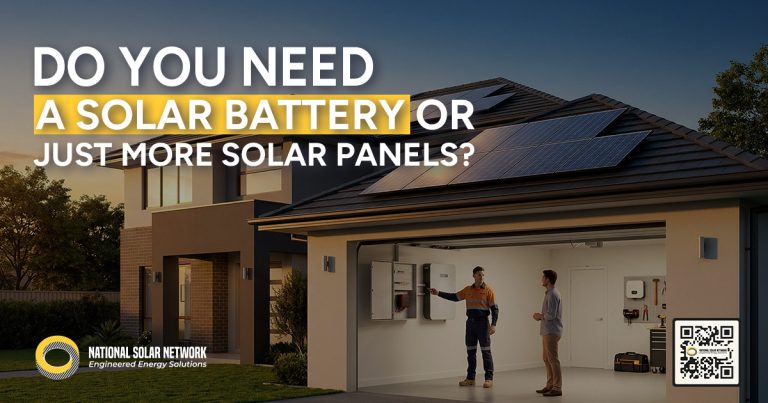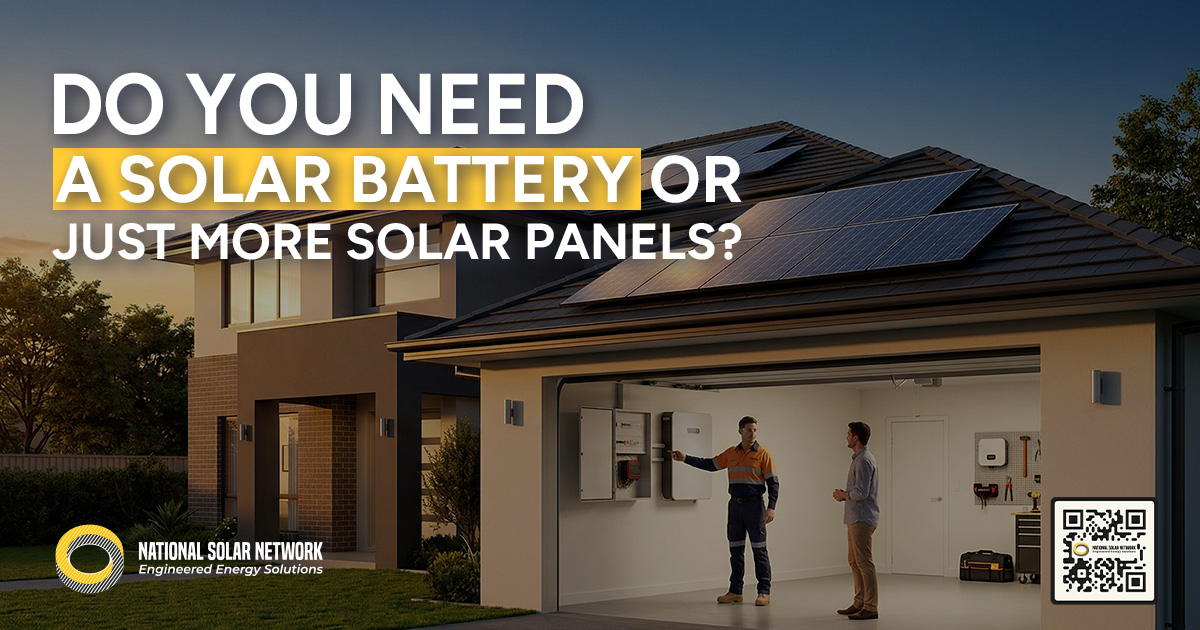
Many homes and businesses ask the same question, especially in Queensland. Should you add a solar battery, or would extra solar panels do more for your bill?
This page helps you decide based on your usage, your existing system, and what you want the system to do. The guidance stays practical and compliance-aware, including how rebates work and what can be verified.
Quick self-check: is a solar battery worth assessing?
If you answer yes to three or more, a solar battery is usually worth a closer look.
- Do you use a lot of electricity after 4 pm, especially for air conditioning, cooking, or entertainment?
- Do you often see your system exporting solar in the middle of the day?
- Are you home in the evenings and want to use more of your own solar then, not just during daylight?
- Is backup power important to you, even if it only covers essential circuits?
- Do you have loads you cannot easily shift into daytime hours, such as evening air conditioning or business refrigeration?
- Are you planning to add higher evening demand, such as regular EV charging after work?
- Do you care more about control and self-consumption than maximising exports to the grid?
If you answer yes to fewer than three, the next step is often to review how your current solar panels are performing and when you use electricity.
What a solar battery actually does (and what it does not)
A solar battery stores some of the extra electricity your solar panels produce during the day. That stored energy can then be used later, when your panels are producing less, such as in the late afternoon and evening.
Your home or business still uses solar directly while it is being generated. A battery mainly changes what happens to surplus solar. Instead of exporting all of it to the grid, some can be stored for your own use later. How much it helps depends on your usage patterns and how the system is configured.
Myth: Solar works in a blackout
Most solar-only systems shut down during an outage to protect line workers. Backup power requires a battery system designed for backup, plus the right inverter and switchboard setup.
Myth: A battery replaces the grid
Most properties still rely on the grid at times, even with a battery. A battery reduces grid use at certain times of day, but it does not automatically make a site fully independent.
When a solar battery makes sense in Central Queensland
In Rockhampton and across Central Queensland, the best fit usually comes down to when you use electricity, how much solar you have spare during the day, and whether backup power matters to you. This quick comparison can help you self-check before you go further.
| Battery tends to suit | More solar panels tends to suit |
| You use a lot of power in the late afternoon and evening. | Most of your electricity use happens during daylight hours. |
| Your solar panels often export noticeable surplus during the middle of the day. | Your system rarely exports surplus because the solar is already fully used on site. |
| You want to reduce how much you buy from the grid after dark. | You mainly want to increase daytime solar coverage and exports. |
| You have a clear reason for backup power and know which circuits matter most. | Backup power is not a priority, or you are comfortable with grid-only backup during outages. |
| Your goal includes more control over when you use your own solar. | Your goal is the simplest way to increase generation from the roof you have. |
| You have a household routine that is hard to shift into daytime hours. | You can shift key usage into the day (for example, hot water, pool pump, some appliance runs). |
| You are planning for higher evening demand (for example, air conditioning use after work). | You are mostly trying to offset steady daytime loads (common in some workplaces and daylight operations). |
| You prefer a solution that prioritises self-consumption, even if exports are lower. | You are comfortable exporting more to the grid if the site can generate more. |
Explore our solar battery storage solutions
Explore our solar panels solutions
Your first step: a free solar audit to check your solar panels are battery-ready
A battery recommendation only makes sense once your existing solar panels and hardware have been checked. The goal of the audit is to confirm what is possible, what is compatible, and what would need to change.
What we do in the audit
- Inspect your system and usage
We review your current solar setup and how your electricity use is spread across the day, especially late afternoon and evening demand. - Check inverter and switchboard suitability
We confirm what inverter you have, whether it can support a battery, and whether the switchboard has the right condition and space for a safe, compliant installation. - Confirm export settings and shading impacts
We look at export behaviour and any constraints that affect how much surplus solar is available to charge a battery. We also check shading or layout issues that can reduce usable generation. - Provide clear options
We outline what the sensible next step is based on what we find, including what work is required for each option.
What you get after the audit
- A clear answer on whether your current solar panels are a good fit for adding a battery.
- Practical options, such as battery add-on, inverter changes, or solar adjustments first.
- Next steps you can act on, with the scope explained in plain terms.
If you do not have solar panels yet
If you are starting from scratch, the audit focuses on designing a solar system that matches your roof and usage now, with a clear pathway for a battery later if it suits your goals.
Choosing the right battery size, setup, and cost drivers (without guessing)
Size and storage: matching kWh to real usage
Battery capacity is measured in kilowatt-hours (kWh). The right size depends on how much electricity you want to cover after solar production drops, and how much surplus solar you have available to charge the battery during the day.
If the battery is too small, it can run out early and do little in the evening. If it is too large, it may not fully charge on many days, which leaves paid-for capacity unused.
Setup choices: inverter compatibility and backup expectations
How a battery is installed depends on the existing inverter and switchboard. Some systems are designed to integrate batteries more directly, while others need an add-on approach or equipment changes to keep the setup compliant and functional.
Backup power is not automatic. If you want power during outages, the system must be designed for it, including how circuits are arranged. Many properties choose essential circuits rather than whole-home backup, because it is simpler and places fewer demands on the system.
What changes the price: equipment, retrofit work, and complexity
Battery cost is mainly driven by capacity, the equipment selected, and how complex the installation is. Prices can rise when backup hardware is included, when the switchboard needs upgrading, or when access and wiring make the job more involved.
Retrofits can cost more than battery-ready installs if the existing inverter is not compatible or needs changes. Ongoing performance also depends on how the battery is used day to day, because batteries are designed around expected charging and discharging patterns.
Rebates and incentives: what to know and how to verify
Rebates and incentives can reduce upfront cost, but eligibility depends on the program rules at the time and the details of your property and system. We can explain common requirements, but we only treat eligibility as confirmed once the current setup and the latest rules are checked.
Verify here
- Check the official program information for the current criteria, dates, and required documents.
- Confirm whether your system and installer details meet the program conditions.
- Treat any online offer that does not reference the official rules as unverified.
- Use your electricity plan details to understand how exports and self-consumption affect outcomes.
For a practical overview, see our Solar Rebates Guide. The first step is a free solar audit, because your existing solar panels and equipment must be the right fit before any rebate discussion or pricing estimate is reliable.
Book a free quote and battery assessment
What to bring (power bills, usage notes, goals like backup or EV)
Bring a recent electricity bill or two, plus any notes about when you use power most. If backup power matters to you, note what you would want to keep running during an outage. If you have an EV now or plan to add one, include your charging needs and typical driving.
What you will receive (recommendation options and next steps)
You will receive an assessment of whether a solar battery suits your usage and your current system. If it does, you will get clear options on battery size and setup, along with the practical steps required to install it. If it does not, you will get the next best recommendation based on what the assessment shows.